Square feet and linear yards measure different dimensions. Square feet represent area, while linear yards represent length. Therefore, users cannot directly convert square feet to linear yards without knowing the width of the material. A Square Feet to Linear Yards Calculator solves this issue by using the width of the material in feet during the calculation process.
For example, carpeting, fabric rolls, and artificial grass often come in fixed widths. Once users know the total square footage and the width of the material, they can calculate how many linear yards they need to purchase. This conversion method improves accuracy in budgeting, purchasing, and project estimation while reducing waste and installation delays.
Detailed Explanations of the Calculator's Working
The calculator works by dividing the total square footage by the width of the material and then converting the result into yards. Since one yard equals three feet, the calculation includes a division by 3 after accounting for the material width.
Users first enter the total square feet required for the project. Next, they input the width of the material in feet. The calculator then determines the equivalent linear yards needed for purchase or installation.
This process becomes especially useful when materials are sold by length instead of area. In addition, the calculator reduces manual errors and speeds up planning for flooring, carpeting, fabric cutting, turf installation, and similar applications. Consequently, users can estimate costs more accurately and avoid ordering excessive materials.
Formula with Variables Description

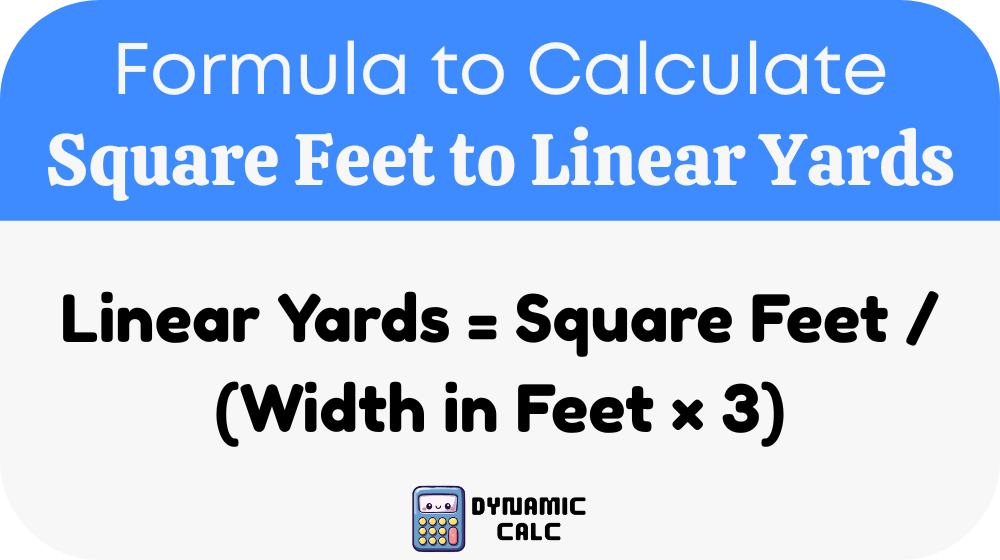
Variables Description
| Variable | Description |
|---|---|
| Linear Yards | Total material length required in yards |
| Square Feet | Total project area in square feet |
| Width in Feet | Width of the material roll or surface |
| 3 | Conversion factor because 1 yard = 3 feet |
Common Square Feet to Linear Yards Conversion Table
| Square Feet | Width (Feet) | Linear Yards |
|---|---|---|
| 100 | 12 | 2.78 |
| 200 | 12 | 5.56 |
| 300 | 12 | 8.33 |
| 400 | 12 | 11.11 |
| 500 | 12 | 13.89 |
| 600 | 12 | 16.67 |
| 100 | 15 | 2.22 |
| 200 | 15 | 4.44 |
| 300 | 15 | 6.67 |
| 400 | 15 | 8.89 |
| 500 | 15 | 11.11 |
| 600 | 15 | 13.33 |
Additional Helpful Conversion Reference
| Unit | Equivalent |
|---|---|
| 1 Yard | 3 Feet |
| 1 Square Yard | 9 Square Feet |
| 1 Linear Yard (3 ft width) | 9 Square Feet |
| 1 Linear Yard (12 ft width) | 36 Square Feet |
| 1 Linear Yard (15 ft width) | 45 Square Feet |
Example
Suppose a room requires 360 square feet of carpet, and the carpet roll width is 12 feet.
Using the formula:
Linear Yards = 360 ÷ (12 × 3)
Linear Yards = 360 ÷ 36
Linear Yards = 10
Therefore, the project requires 10 linear yards of carpet. This calculation helps buyers purchase the correct amount without overspending. Furthermore, installers can plan cutting layouts more efficiently and reduce leftover waste.
Applications
Carpet and Flooring Installation
Carpet suppliers and flooring installers frequently use square feet to linear yards conversions because carpets and vinyl materials are commonly sold in linear yards. Accurate calculations help contractors estimate costs correctly and reduce excess material purchases. Additionally, proper conversions simplify installation planning and improve customer budgeting.
Fabric and Textile Industry
Fabric stores often sell materials by the linear yard, while sewing projects require area measurements. Therefore, fashion designers, upholsterers, and interior decorators use this calculator to estimate fabric quantities for curtains, furniture covers, and clothing production. As a result, they minimize waste and improve purchasing efficiency.
Landscaping and Artificial Turf
Landscaping companies use this conversion tool when installing artificial grass, ground covers, or rolled landscaping materials. Since turf products come in fixed widths, converting square footage into linear yards ensures accurate ordering. Consequently, project managers avoid delays caused by insufficient materials and reduce unnecessary inventory costs.
Most Common FAQs
What is the difference between square feet and linear yards?
Square feet measure area, while linear yards measure length. Square feet describe the total surface coverage of a space, whereas linear yards indicate the length of a material sold in rolls or strips. Because they measure different dimensions, users must know the material width before converting square feet into linear yards. This distinction becomes especially important in carpet installation, fabric cutting, flooring projects, and landscaping work where suppliers sell materials based on linear length rather than total area.
Why do I need the width of the material for conversion?
The width determines how much area one linear yard of material can cover. Without the width, the conversion would be inaccurate because wider materials cover more square footage per linear yard. For example, a 15-foot-wide carpet covers more area per yard than a 12-foot-wide carpet. Therefore, the calculator requires the material width to produce an accurate result. This method helps contractors, homeowners, and designers purchase the correct amount of material and avoid unnecessary expenses.
Can I use this calculator for carpet measurements?
Yes, this calculator works extremely well for carpet measurements. In fact, carpeting represents one of the most common uses of square feet to linear yards conversions. Carpet rolls usually come in standard widths such as 12 feet or 15 feet. By entering the room’s square footage and the carpet width, users can quickly determine how many linear yards they need. Consequently, they can estimate project costs accurately and reduce material waste during installation.