A Pitch Speed Equivalent Calculator estimates the perceived speed of a pitch when the pitching distance changes. Instead of measuring raw velocity alone, the calculator adjusts the speed based on reaction time and travel distance. As a result, athletes can compare pitches thrown from different mound lengths or sports formats.
This calculator is especially useful in baseball and softball because each sport uses different pitching distances. For instance, softball pitchers throw from a shorter distance than baseball pitchers. Consequently, hitters often experience less reaction time even when the radar gun speed appears lower. By calculating equivalent speed, players can better understand pitch difficulty, batting timing, and game performance. Furthermore, the tool helps coaches create balanced training programs for all skill levels.
Detailed Explanations of the Calculator’s Working
The calculator works by comparing the relationship between pitch speed and pitching distance. A pitch traveling from a shorter distance reaches the batter faster, which reduces reaction time. Therefore, the calculator increases or decreases the equivalent speed to match the new distance.
First, the calculator takes the original pitch speed and original pitching distance. Next, it uses the target distance for comparison. Then, it applies a proportional formula that adjusts the speed according to the distance ratio. As a result, users can determine how fast a pitch would feel at another mound distance.
This method helps athletes compare softball and baseball pitches accurately. In addition, it supports training drills, batting machine settings, and scouting analysis. Coaches also use these calculations to simulate competitive conditions during practice sessions.
Formula with Variables Description

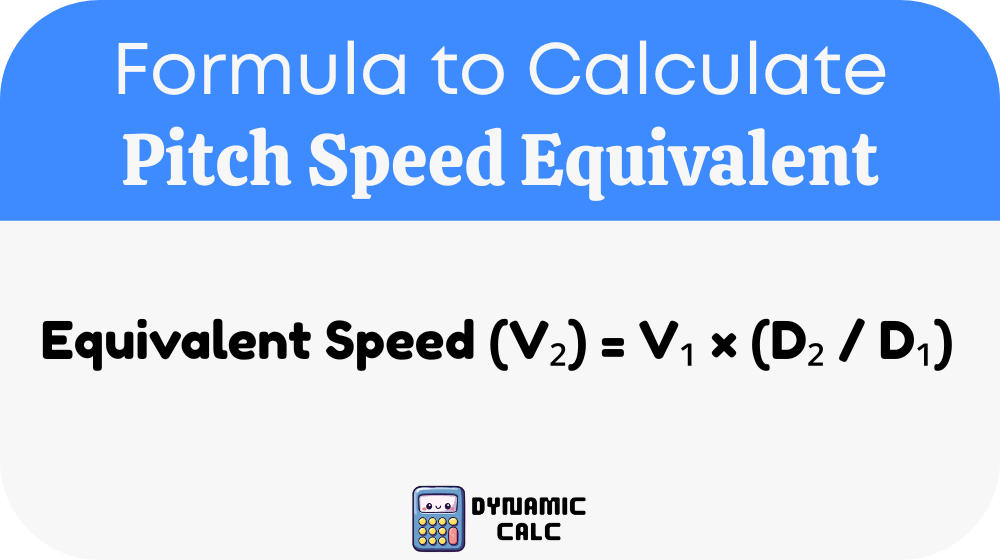
Where:
- V₁ = Original pitch speed
- V₂ = Equivalent pitch speed
- D₁ = Original pitching distance
- D₂ = New pitching distance
Variable Explanation
| Variable | Meaning | Example |
|---|---|---|
| V₁ | Initial measured pitch speed | 60 MPH |
| V₂ | Converted equivalent speed | 84.4 MPH |
| D₁ | Original mound distance | 43 feet |
| D₂ | Comparison mound distance | 60.5 feet |
Common Pitch Speed Equivalents Table
| Original Pitch | Original Distance | Equivalent Distance | Equivalent Speed |
|---|---|---|---|
| 50 MPH Softball | 43 ft | 60.5 ft | 70.3 MPH |
| 55 MPH Softball | 43 ft | 60.5 ft | 77.3 MPH |
| 60 MPH Softball | 43 ft | 60.5 ft | 84.4 MPH |
| 65 MPH Softball | 43 ft | 60.5 ft | 91.4 MPH |
| 70 MPH Softball | 43 ft | 60.5 ft | 98.5 MPH |
| 80 MPH Baseball | 60.5 ft | 43 ft | 56.9 MPH |
| 90 MPH Baseball | 60.5 ft | 43 ft | 64.0 MPH |
| 95 MPH Baseball | 60.5 ft | 43 ft | 67.5 MPH |
Standard Pitching Distances Reference
| Sport Level | Pitching Distance |
|---|---|
| MLB Baseball | 60 ft 6 in |
| Little League Baseball | 46 ft |
| Fastpitch Softball | 43 ft |
| Youth Softball | 35–40 ft |
| College Baseball | 60 ft 6 in |
Example
Suppose a softball pitcher throws at 60 MPH from a regulation softball distance of 43 feet. A coach wants to know the equivalent baseball speed from 60.5 feet.
Using the formula:
V₂ = 60 × (60.5 ÷ 43)
V₂ = 60 × 1.406
V₂ = 84.4 MPH
Therefore, a 60 MPH softball pitch feels similar to an 84.4 MPH baseball pitch because the batter has nearly the same reaction time. Consequently, this comparison helps hitters and scouts better evaluate pitching performance across sports formats.
Applications
Baseball and Softball Training
Coaches use equivalent speed calculations to improve batting practice and reaction training. For example, pitching machines can simulate faster game conditions without increasing injury risk. As a result, athletes develop better timing and pitch recognition skills.
Player Development and Scouting
Scouts and trainers compare athletes from different leagues and age groups using equivalent pitch speed data. Therefore, the calculator supports fair performance evaluation and recruitment decisions. In addition, it helps identify players with advanced reaction-speed abilities.
Sports Science and Analytics
Sports analysts use pitch equivalency calculations to study hitter reaction times and performance trends. Furthermore, training programs rely on these metrics to design realistic drills and workload management strategies. This scientific approach improves player preparation and long-term athletic development.
Most Common FAQs
What is a Pitch Speed Equivalent Calculator?
A Pitch Speed Equivalent Calculator converts pitch velocity from one throwing distance to another. Instead of focusing only on radar gun readings, the calculator evaluates how quickly the ball reaches the batter. Consequently, it measures the perceived difficulty of a pitch more accurately. Coaches, players, and scouts commonly use this tool in baseball and softball training. In addition, it helps compare athlete performance across leagues, age groups, and sports formats. The calculator also supports pitching machine setup and advanced sports analytics.
Why does softball pitching feel faster than the radar speed suggests?
Softball pitching often feels faster because pitchers throw from a much shorter distance than baseball pitchers. Even though softball radar speeds appear lower, the reduced travel distance gives hitters less reaction time. As a result, the perceived speed increases significantly. For example, a 65 MPH softball pitch can feel similar to a baseball pitch above 90 MPH. Therefore, equivalent speed calculations help players understand the true challenge of hitting fastpitch softball. This comparison also improves cross-sport performance evaluation and training design.
How accurate is the equivalent speed formula?
The formula provides a strong estimate based on reaction time and distance ratios. However, actual pitch difficulty also depends on spin rate, pitch movement, release mechanics, and batter skill level. Therefore, the calculator should support training analysis rather than replace real-world performance evaluation. Nevertheless, coaches and sports analysts widely use this method because it offers consistent and easy-to-understand comparisons. In addition, the formula helps create standardized pitching benchmarks for practice sessions and athlete assessments.