An Inventory Turnover Calculator is a financial tool that calculates the inventory turnover ratio using the cost of goods sold (COGS) and average inventory. The resulting ratio indicates how efficiently a business converts inventory into sales over a given period. A higher inventory turnover generally suggests efficient inventory management and strong product demand, while a lower ratio may indicate overstocking, slow-moving products, or weak sales performance. However, the ideal turnover ratio varies by industry, product category, and business model. Therefore, businesses should compare their inventory turnover with industry benchmarks rather than relying on a universal standard to evaluate performance.
How the Inventory Turnover Calculator Works
The Inventory Turnover Calculator requires two essential inputs: Cost of Goods Sold (COGS) and Average Inventory. First, determine the total cost of goods sold during the selected accounting period, such as a month, quarter, or year. Next, calculate the average inventory by adding the beginning inventory and ending inventory, then dividing the total by two. The calculator divides COGS by Average Inventory to produce the inventory turnover ratio. A higher result means inventory sells and replenishes more frequently, while a lower value suggests inventory remains in storage longer. Businesses can use this calculation to evaluate purchasing strategies, optimize warehouse management, forecast inventory needs, and improve cash flow planning.
Inventory Turnover Formula
Inventory Turnover Calculator Formula (UTF-8 Plain Text)

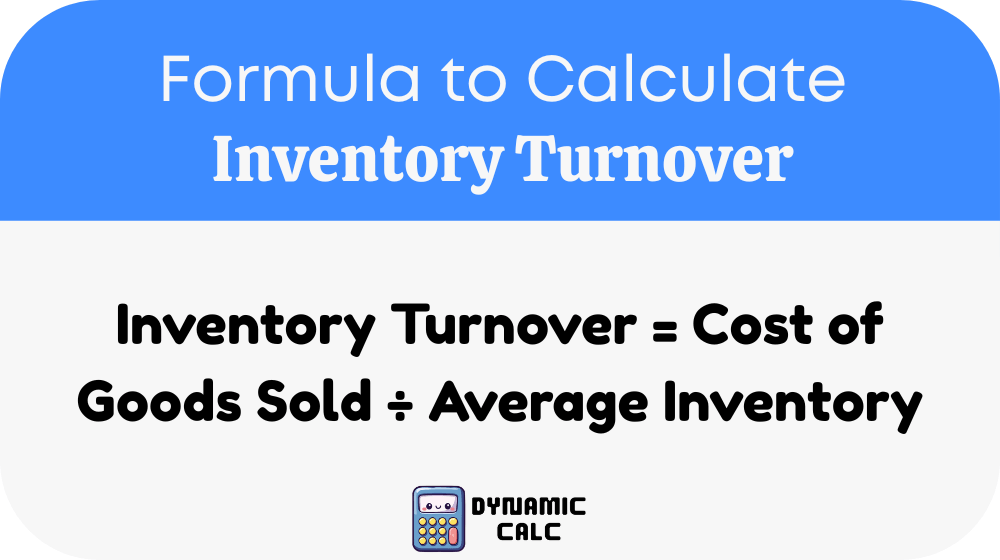
Where:
Cost of Goods Sold (COGS) = Total direct cost of producing or purchasing goods sold during the period
Average Inventory = (Beginning Inventory + Ending Inventory) ÷ 2
Variables Description:
Inventory Turnover = Number of times inventory is sold and replaced during a period
Cost of Goods Sold (COGS) = Total inventory cost associated with products sold
Beginning Inventory = Inventory value at the start of the accounting period
Ending Inventory = Inventory value at the end of the accounting period
Average Inventory = Average inventory held during the reporting period
Common Inventory Turnover Reference Table
| Inventory Turnover Ratio | Interpretation | Business Insight |
|---|---|---|
| Less than 1 | Very Low | Inventory is moving extremely slowly. |
| 1–2 | Low | Overstocking or weak sales may exist. |
| 2–4 | Average | Suitable for many manufacturing businesses. |
| 4–6 | Good | Healthy inventory movement for many retailers. |
| 6–8 | Very Good | Efficient inventory management. |
| 8–10 | Excellent | Strong demand and rapid stock movement. |
| Above 10 | Very High | Excellent efficiency but monitor for stock shortages. |
Inventory Days Equivalent
| Inventory Turnover | Approximate Days Inventory Outstanding |
|---|---|
| 2 | 183 days |
| 3 | 122 days |
| 4 | 91 days |
| 5 | 73 days |
| 6 | 61 days |
| 8 | 46 days |
| 10 | 37 days |
| 12 | 30 days |
Formula:
Days Inventory Outstanding (DIO) = 365 ÷ Inventory Turnover
Example
A retail business reports the following figures for the year:
Cost of Goods Sold = $480,000
Beginning Inventory = $70,000
Ending Inventory = $50,000
Step 1:
Average Inventory = ($70,000 + $50,000) ÷ 2
Average Inventory = $60,000
Step 2:
Inventory Turnover = $480,000 ÷ $60,000
Inventory Turnover = 8
Interpretation:
The company sold and replenished its inventory eight times during the year. This generally indicates efficient inventory management and healthy sales, assuming it aligns with industry standards.
Applications
Retail Inventory Management
Retail businesses use inventory turnover to identify fast-selling and slow-moving products. By monitoring turnover regularly, managers can improve purchasing decisions, reduce excess inventory, optimize shelf space, and increase profitability. Higher turnover also reduces storage costs and decreases the risk of obsolete inventory.
Manufacturing Operations
Manufacturers use inventory turnover to balance production schedules with customer demand. Monitoring turnover helps prevent overproduction, reduces warehouse costs, and improves material planning. Efficient inventory movement also contributes to smoother production processes and stronger cash flow management.
Financial Analysis and Business Planning
Investors, accountants, financial analysts, and lenders often evaluate inventory turnover when assessing business performance. A healthy turnover ratio demonstrates efficient asset utilization and effective inventory control. Businesses also use this metric to forecast purchasing needs, improve budgeting, and identify opportunities for operational improvements.
Most Common FAQs
What is a good inventory turnover ratio?
A good inventory turnover ratio depends heavily on the industry in which a business operates. Grocery stores often achieve turnover ratios above 10 because products sell quickly, while furniture manufacturers may have ratios between 2 and 4 due to longer sales cycles. Instead of comparing with businesses in different industries, companies should compare their ratio against competitors and historical performance. Consistent improvement over time usually indicates better inventory management regardless of the exact number.
Why is inventory turnover important?
Inventory turnover measures how efficiently a company converts inventory into sales. Businesses with healthy turnover generally experience lower storage costs, improved cash flow, reduced waste, and better profitability. Additionally, tracking turnover helps identify slow-moving products before they become obsolete. Financial institutions and investors also consider inventory turnover when evaluating operational efficiency and overall business performance because it reflects how effectively management utilizes company assets.
What happens if inventory turnover is too low?
A low inventory turnover ratio often indicates excess inventory, declining customer demand, inaccurate forecasting, or ineffective purchasing strategies. Slow-moving inventory ties up working capital, increases storage expenses, and raises the risk of products becoming outdated or damaged. Businesses experiencing low turnover should review pricing strategies, improve sales forecasting, optimize purchasing quantities, and eliminate products that consistently underperform to improve inventory efficiency.
Can inventory turnover be too high?
Yes. Although a high inventory turnover generally reflects strong sales and efficient inventory management, an extremely high ratio may suggest inventory levels are too low. Frequent stock shortages can result in lost sales, dissatisfied customers, delayed deliveries, and reduced customer loyalty. Businesses should balance inventory turnover with adequate stock availability to maintain smooth operations and consistently meet customer demand without excessive inventory investment.