FiO₂ stands for Fraction of Inspired Oxygen. It represents the percentage or decimal concentration of oxygen in the air mixture that a person inhales. Normal room air contains approximately 21% oxygen, which equals an FiO₂ of 0.21. When supplemental oxygen is provided through nasal cannula, face mask, or ventilator systems, the FiO₂ level increases above room air. The FiO₂ Calculator estimates this increased oxygen concentration based on oxygen flow and breathing demand. This value plays a major role in respiratory assessment because it helps determine whether oxygen support is sufficient, excessive, or needs adjustment for safe treatment.
Detailed Explanations of the Calculator’s Working
The FiO₂ Calculator works by combining the oxygen already present in room air with the extra oxygen delivered through a medical device. First, room air contributes a baseline FiO₂ of 0.21. Next, supplemental oxygen flow, measured in liters per minute, increases the oxygen concentration. However, the final inhaled oxygen level also depends on the patient’s minute ventilation, which is the total volume of air breathed each minute. If ventilation is high, inhaled oxygen becomes more diluted. If ventilation is low, oxygen concentration rises more quickly. Therefore, the calculator estimates FiO₂ by comparing oxygen flow to breathing demand. This method provides a practical estimate for routine clinical use.
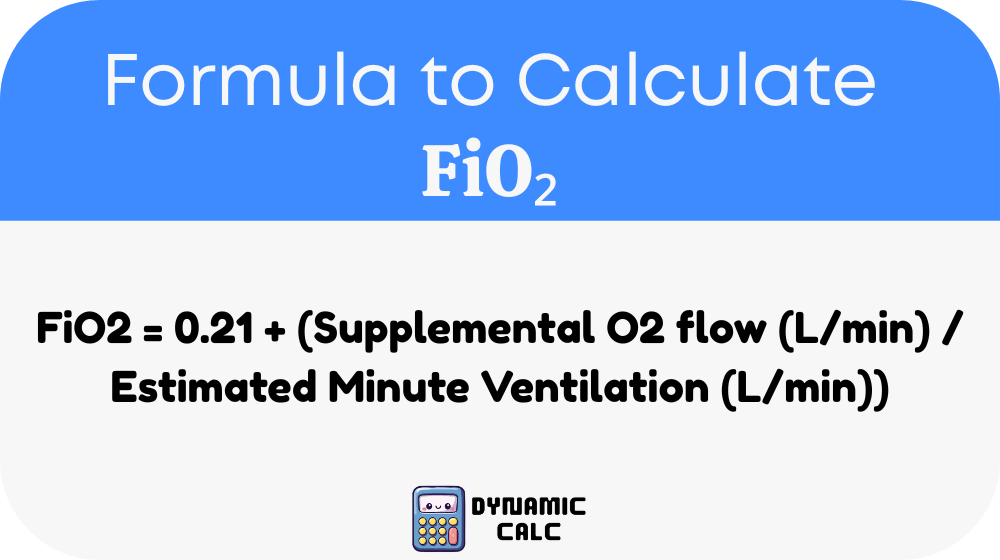
Formula with Variables Description
Formula
Variables Description
- FiO2 = Fraction of inspired oxygen in decimal form
- 0.21 = Oxygen concentration in room air (21%)
- Supplemental O2 flow (L/min) = Oxygen delivered from device per minute
- Estimated Minute Ventilation (L/min) = Total air inhaled and exhaled per minute
Convert Decimal to Percentage
FiO2 (%) = FiO2 × 100
Quick Reference Table for Common Oxygen Flow Rates
| Oxygen Device | Flow Rate (L/min) | Approx. FiO₂ | Approx. Percentage |
|---|---|---|---|
| Room Air | 0 | 0.21 | 21% |
| Nasal Cannula | 1 | 0.24 | 24% |
| Nasal Cannula | 2 | 0.28 | 28% |
| Nasal Cannula | 3 | 0.32 | 32% |
| Nasal Cannula | 4 | 0.36 | 36% |
| Nasal Cannula | 5 | 0.40 | 40% |
| Nasal Cannula | 6 | 0.44 | 44% |
| Simple Face Mask | 6–10 | 35%–50% | 35%–50% |
| Non-Rebreather Mask | 10–15 | 60%–90% | 60%–90% |
Example
A patient receives 4 L/min oxygen through a nasal cannula. Estimated minute ventilation is 8 L/min.
FiO2 = 0.21 + (4 / 8)
FiO2 = 0.21 + 0.50
FiO2 = 0.71
FiO2 (%) = 71%
This simplified estimate shows that higher oxygen flow combined with moderate ventilation can significantly increase inspired oxygen concentration. Clinical device efficiency and leakage may lower actual delivered values.
Applications
Emergency Medicine
Emergency teams use the FiO₂ Calculator to estimate oxygen delivery quickly during trauma, breathing distress, or low oxygen saturation events. Fast calculations support urgent treatment decisions and improve stabilization.
ICU and Hospital Monitoring
Critical care staff monitor FiO₂ to balance oxygen therapy and avoid under-treatment or excessive oxygen exposure. Accurate FiO₂ values help manage ventilators, masks, and patient progress efficiently.
Home Oxygen Therapy
Patients using home oxygen systems can use FiO₂ estimates to understand therapy settings better. It also helps caregivers communicate clearly with healthcare providers regarding oxygen adjustments.